How to Visit a Brewery Without Looking Like You Don't Know What You're Doing
Here's the thing about craft brewery taprooms: they're not scary. But they can feel scary if you've never done it before. There are things that are different from a regular bar. There are unwritten rules. There's a whole language. There's beer terminology that makes no sense.
The good news: everyone working at the brewery knows you might not know this stuff, and most of them genuinely enjoy helping people figure it out. Brewers become brewers because they like talking about beer, not because they want to gatekeep a secret club.
So let's walk through exactly what happens when you show up at a brewery taproom for the first time.
Getting There: Hours and Logistics
First, check the brewery's hours before you show up. A lot of breweries operate on irregular schedules, especially smaller ones. Some close midweek. Some don't open until 2pm on Saturdays because the previous night was a late event. Some have seasonal hours.
You can find this on their website, Google Maps, or by calling. If you call, you'll probably get an enthusiastic person who's excited to talk to you about beer, which is a nice experience.
Second, check if they serve food. Some breweries have a full kitchen and restaurant. Some have a food truck parked outside. Some explicitly allow you to bring your own food or have takeout delivered. Some have no food policy at all, and you shouldn't eat there.
This matters because you don't want to arrive hungry and discover that the brewery only serves beer and you have to leave to eat. (Though honestly, going to a brewery hungry is a bad plan anyway. Drink on an empty stomach and you'll have a bad time.)
Third, figure out transportation. Use a designated driver, call a rideshare, or use public transit. Don't drive yourself unless you're planning to drink nothing alcoholic, which defeats the purpose.
What to Expect: The Physical Space
When you walk in, you'll see a bar. It looks like a regular bar but weirder. There might be brewing equipment visible. There might be couches, board games, shuffleboard, a patio. There might be ten people or fifty. The vibe varies wildly by brewery.
Find a seat at the bar or stand at the counter if there are no seats. Someone will come talk to you within a few minutes. This is the bartender, sometimes called the "tender" or "barista" (if it's a coffee-first, beer-second space). They're going to be friendly and knowledgeable.
The walls will probably have signs explaining the beer styles. There will definitely be beer taps. There might be a lot of beer taps. Some breweries have 50 taps. Some have 4.
The Menu: Flights and Pints
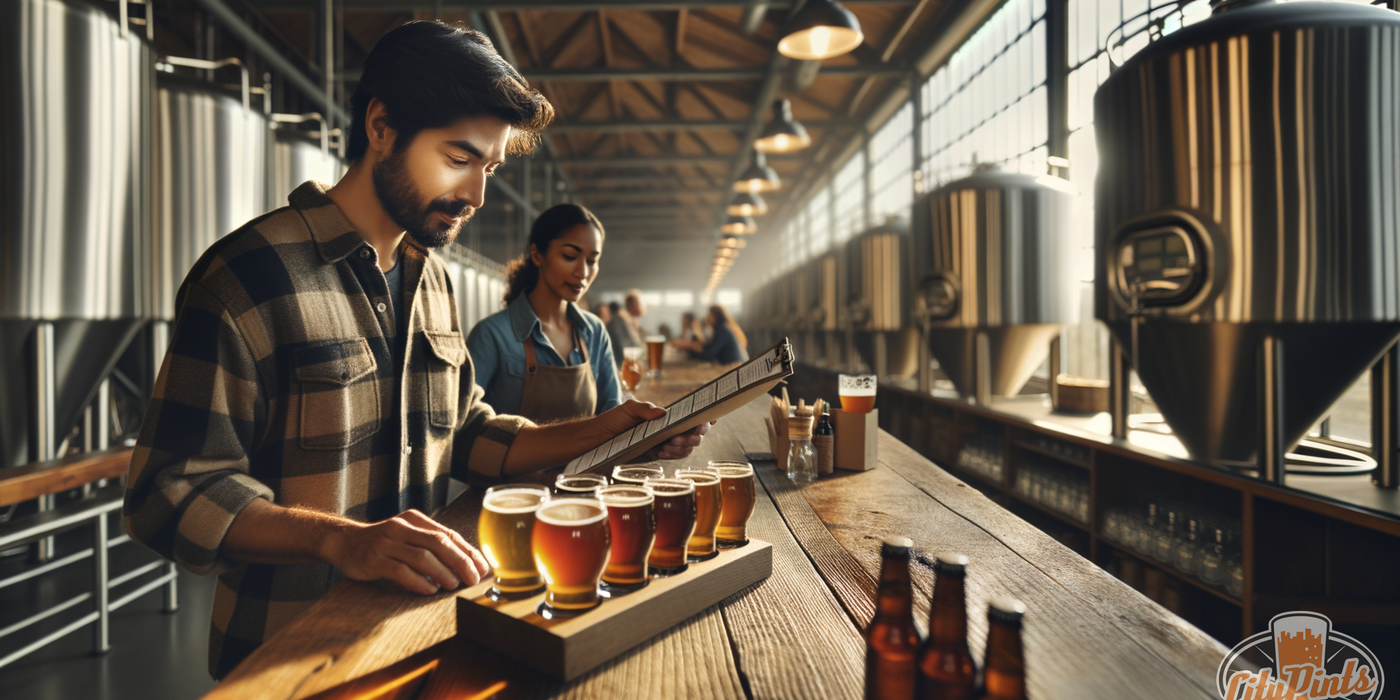
A flight is a collection of small samples, usually 4 to 6 beers, each about 4-5 ounces. It's the first-timer's best friend. You order a flight and get to try several beers without committing to a full pint of something you don't like.
The order matters. Ask your bartender which order to go in. The general rule is light to dark, delicate to bold. You taste a pale lager before a stout. You taste a blonde ale before an IPA. This is because strong hop flavors stick in your mouth and will ruin subtle flavors if you go the other way around.
A pint is a full 16 ounces, and most craft beers are between 5% and 7% ABV (alcohol by volume), so pints hit harder than mass-market beer. Don't think ordering a pint is the "real" way to drink beer. Flights exist for a reason.
Expect to pay around $12-$16 for a flight, depending on the brewery and location. Expect to pay around $5-$8 for a pint. This is not cheap compared to a Bud Light at a dive bar, but you're paying for craft, consistency, and the experience.
The Art of Ordering
Walk up to the bar and make eye contact. Say hi. Be friendly. Order a flight if it's your first time. Give the bartender a hint about what you like ("I usually like hoppy beers" or "I don't like sour stuff") and let them recommend which flight to start with.
Most breweries have a flagship beer, which is their main offering that they've perfected over time. Order that first. It tells you what the brewery is actually about. Then move to more experimental stuff.
If you don't like something, tell the bartender. Seriously. They want to know. They'll recommend something else. They're not going to judge you for not liking their beer. Brewers are used to people having different tastes.
Don't order beer based on the name alone, even if the names are funny. "My God, It's Full of Stars" might be brilliant or weird or not your thing. Ask the bartender what it tastes like before you commit.
Tipping Like You Know What You're Doing
Tip your bartender. The standard is $1 per beer or 15-20% on your tab, same as a regular bar. If the bartender spent time talking to you about beer and making recommendations, tip closer to 20%.
This is not optional. Bartenders make their living on tips, and brewery bartenders often know a ton about beer and take pride in their work. They deserve it.
Talking to Your Bartender Without Sounding Clueless
The secret that nobody tells you: bartenders want to talk about beer. They went into this job because they like beer. If you ask them questions, they will light up like you just gave them a birthday present.
Ask them: - What's the most popular beer right now? - What's your personal favorite? - What's the difference between this IPA and that IPA? - How long does this beer take to make? - Is this beer available year-round? - What should I pair with this if I'm going to eat?
Don't ask: - Can you make this beer taste like something else? - Do you have Bud Light? (Some breweries do, many don't, but asking feels like a personal attack) - Why is craft beer so expensive? (It isn't, relatively, but this is a loaded question)
The bartender will probably ask you what you like and steer you toward something good. Let them. They do this for every person who comes in. They have instincts.
When You Find Something You Like
Congratulations. That's your beer now. You can order it by name next time. You can talk about it. You can come back specifically for it.
Most breweries release seasonal beers or limited runs, so if you love something, ask when it will be available next. The bartender will know. If it's a one-off experimental beer, enjoy it while it lasts.
The Weird Stuff You Might See
Some breweries have tours. Take one if it's available. You'll see the brewing equipment, understand the process better, and probably get a free sample.
Some have board games. Play them. This is part of the experience.
Some allow dogs (check first). Bring your dog if they do. Brewery dogs are the friendliest dogs.
Some have live music. Some have trivia nights. Some have special events like a hoppy beer night or a sour beer showcase. These are great ways to level up your brewery experience.
Some have crowlers, which are filled cans you can take home. Some have growlers, which are 64-ounce glass jugs you fill and take home. If you're interested, ask about it. The beer travels better in a crowler, but a growler is a cool thing to own.
Timing Matters
The best time for a first brewery visit is a weekday afternoon, ideally between 2pm and 5pm. The taproom will be quieter, you'll get more attention from the bartender, and the vibe won't be crushed by a Friday night crowd.
If you have to go on a weekend, go early. Don't arrive at 8pm on a Saturday and expect to have a relaxed conversation with your bartender. You'll get beer, but not the experience.
What to Wear
Nothing special. Wear whatever you'd wear to a coffee shop. Some breweries are more formal (urban, trendy), most are super casual (jeans, t-shirt, sneakers are fine). Brewery culture is aggressively casual. Don't overthink this.
Starting with Flagship Beers
Your first trip should include the brewery's flagship beer, which is the one they've been making the longest. It defines what the brewery is about. Notch's Session Pils, Von Trapp's Lager, Jack's Abby's House Lager, Firestone Walker's 805.
Flagship beers are intentionally designed to be representative of the brewery's philosophy. They're their business card. If you hate the flagship, you'll probably hate most of the other stuff too.
Building Your Beer Vocabulary
You don't need to learn beer language to enjoy beer. But here are some basics:
IBU (International Bitterness Unit): measures how bitter a beer is. Higher number = more bitter. 20-40 is mellow, 60+ is aggressively hoppy.
ABV (Alcohol By Volume): the booze content. Most craft beers are 5-7%. Higher is boozier.
Hop-forward: relies heavily on hoppy, bitter flavors. This is what most IPAs are.
Malty: emphasizes the grain flavors, usually sweet and caramelly. This is what most porters and stouts are.
IBU doesn't tell you everything, and you don't need to memorize these. You need to know enough to point your bartender in a direction and let them handle it.
The FAQ
Do I have to order a flight my first time?
No, but it's smart. Flights let you try multiple beers without committing to a full pint of something you hate. The bartender will understand if you order pints instead, but flight is the safer first move.
What if I don't like beer?
Some breweries make hard seltzers, ciders, or other drinks. But if you genuinely don't like beer, a brewery might not be the right place. That's fine. Not every venue is for every person.
What's the dress code?
There isn't one, really. Brewery taprooms are aggressively casual. Wear whatever you'd wear to a casual coffee shop. Jeans and a t-shirt are perfect.
Can I bring kids?
Most breweries allow kids during daytime hours. Some have specific family-friendly times. Check with the brewery first. If kids are there, they're usually hanging out with parents, eating snacks, playing games. It's not a party.
Is there a "wrong" beer to order?
Not really. Order what sounds good. If you hate it, tell the bartender and order something else. This is not a test. You can't fail.
What if I have allergies?
Tell your bartender. Breweries handle gluten issues, ingredient sensitivities, and allergies all the time. They're used to being asked. They can help.
The Recommendation
Pick a brewery near you that seems interesting, look at their hours, show up during a weekday afternoon, order a flight, and talk to your bartender. That's it. That's the whole thing.
You'll either love it or you won't, but you'll understand what the fuss is about. And if you do love it, you've just found a place where people care about making good beer and actually enjoy talking about it.
That's worth showing up for. 🍺
Check out CityPints' brewery finder to locate taprooms and breweries near you.
Enjoying Happy Hour?
Get weekly craft beer picks, brewery spotlights, and insider guides delivered to your inbox.