The Great Contraction: Why Craft Breweries Are Scaling Back
The craft beer industry hit a weird inflection point sometime around 2023. The explosive growth everyone predicted flatlined. Some established breweries started closing. Others downsized dramatically. But here's the counterintuitive part: this is actually good news.
If you've been paying attention to craft beer, you've probably noticed that the old playbook doesn't work anymore. The plan used to be simple: start small, grow aggressively, expand distribution, build a taproom, maybe add a kitchen, maybe go public, maybe get acquired by a bigger company. Rinse and repeat. Scale was the goal because scale meant success.
Now breweries are rejecting that entirely. They're getting smaller on purpose. And the beer is getting better because of it.
The Nano Brewery Boom: How <3 Barrels Became a Business Model
A nano brewery produces less than 3 barrels per batch. That's roughly 93 gallons. To put that in perspective, a 7-barrel system, which is pretty standard for a microbrewery, produces roughly 217 gallons per batch. Nano breweries are making something like 40% of what a microbrewery makes in each batch.
This should sound inefficient. It is. But it's also the most efficient business model in craft beer right now.
Here's the math: Starting a traditional microbrewery costs $500,000 to $1 million or more. You need the brewing equipment, the fermentation tanks, the cold storage, the filtration systems, the packaging line. You need a building. You need permits. You need insurance. You need working capital to keep brewing for months before you see any revenue.
A nano brewery? You can start one for $25,000 to $100,000. Sometimes less. Your equipment is smaller. Your space is smaller. Your overhead is smaller. And crucially, your breakeven point is much lower. You don't need to convince wholesalers to carry your beer. You don't need regional distribution. You don't need a food program.
You just need a taproom and a loyal local audience.
The Taproom Economy Is the Real Craft Beer Business
Here's a statistic that upends the old craft beer narrative: taprooms and brewpubs represent about 73% of all craft businesses in America. But they only generate about 15% of the total volume.
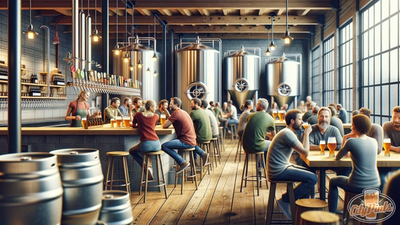
Let that sink in. The vast majority of craft breweries are small, taproom-focused operations that don't compete on volume. They compete on identity, community, and experience.
This is a fundamental shift from where the industry thought it was going 10 years ago. Back then, the goal was to build a brewery that made enough beer to distribute nationally. That was success. Everything else was a stepping stone toward that goal.
Now the goal is to build a brewery where people want to hang out. Where they know your name. Where they can suggest flavor ideas and see them on your next batch. Where they bring friends because the vibes are good and the beer is strange and interesting.
That's actually a much better business than trying to compete with Boston Beer on shelf space.
Why Simplification Means Better Margins
This is the part that business school doesn't teach you: sometimes making less stuff makes more money.
A microbrewery's profit margins get crushed by distribution costs, packaging costs, and the pressure to keep producing at capacity to amortize the massive equipment investment. You have to be big to survive. You need bars in three states carrying your beer. You need a full-time salesman. You need packaging lines running 24 hours.
A nano brewery doesn't have distribution costs because it doesn't distribute. It doesn't have packaging waste because most of what it makes gets drunk in-house. It doesn't have a sales team because customers find the brewery themselves.
The result: better margins, less pressure to compromise on quality or consistency, and the ability to experiment wildly because you're not locked into a rigid production schedule.
When Kraemer & Kin in San Diego voluntarily scaled back from a full-service 100-seat restaurant with a 15-barrel brewhouse to a smaller taproom with 3-barrel nano equipment, people thought they were crazy. But the brewers knew something the market didn't: they could make better beer and more money with less stuff.
The Experiment Economy
One of the casualties of large-scale craft brewing is experimentation. If you're running a 15-barrel system and you need to hit production targets, you can't afford to spend a batch on a weird experimental IPA made with expired hops and fermented at slightly-too-warm temperatures just to see what happens.
A nano brewery's whole advantage is that it can do exactly that. Make weird beers. Try new things. Fail fast. Learn from it. Try something different next week.
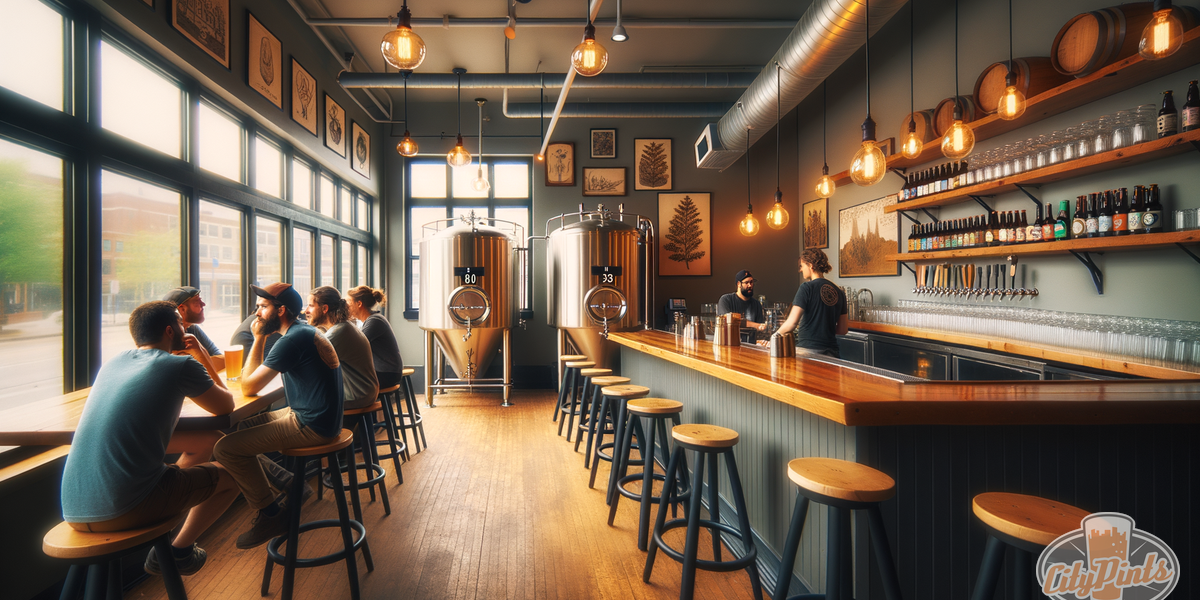
This is why visiting a nano brewery's taproom feels different. You're not seeing a carefully curated menu of flagship beers designed to appeal to the broadest possible audience. You're seeing what the brewer is actually into right now. What they got excited about. What they wanted to learn.
Some of it will be incredible. Some will be terrible. Most will be interesting in ways that big beer companies could never afford to be.
What This Means for Beer Drinkers
The contraction of the mega-growth model is genuinely good for people who like beer.
First, there's more variety. Instead of one regional brewery trying to distribute 40 different styles to 20 states, you have 40 nano breweries each making 3 styles they actually care about. The total breadth of what's available to you locally is bigger.
Second, there's more local identity. A tiny brewery in Portland is going to taste and feel different from a tiny brewery in New Orleans. They're going to use different water. Different ingredients. Different cultural references. Different vibes. That diversity is a feature, not a bug.
Third, there's more innovation. Not the spray-bottle gimmick innovation where breweries add mango pucker and call it a new style. The real innovation of asking "what if we fermented this with koji" or "what if we made beer from grain we grew ourselves." That kind of weird gets possible when you're not trying to hit quarterly targets for shareholders.
And fourth, there's more connection. You can actually talk to the person who made your beer. That's not a quaint small-brewery thing. That's a feature. That person wants to know what you thought. They're paying attention.
The Consolidation You're Actually Seeing
It's worth acknowledging that some breweries are definitely closing. Some are consolidating. The industry shook out some excess. But the narrative of "craft beer is dying" is wrong.
What's actually happening is that craft beer is maturing. The gold-rush period where anyone with a business loan and a recipe could build a microbrewery and sell beer to every bar in a 200-mile radius is over. That required a specific market moment. We had it. It's passed.
What's replacing it is a more sustainable industry where most breweries are small, focused, community-oriented, and profitable. That's more boring than "billion-dollar beer brand story," but it's more stable. More interesting to people who actually like beer.
The breweries that thrived during the growth phase but don't fit the new model are the ones struggling. The breweries that understood the real value proposition of craft beer before it was cool, those are doing fine.
The Nano Brewery Advantage for New Brewers
If you've ever thought about starting a brewery, the nano brewery model makes it possible. You don't need to raise $500,000. You don't need to have a detailed 5-year plan with revenue projections. You don't need to convince investors that your IPA is going to disrupt the industry.
You need a good 3-barrel system (there are used ones available), a small space with water and electrical infrastructure, basic brewing knowledge, and about 50 people in your community who think you're fun.
This is how you get more diverse ownership in beer. More women starting breweries. More people from communities outside the typical craft beer demographic. More weird ideas that would never pass a VC pitch meeting but turn out to be awesome.
The FAQ
What exactly is a nano brewery?
A nano brewery produces less than 3 barrels per batch, which is roughly 93 gallons. That's about 5-6 times smaller than a typical microbrewery's system. Most nano breweries are taproom-only operations without any distribution.
Are nano breweries the future of craft beer?
Not the only future, but definitely the growing part of the future. About 73% of craft breweries are now taproom-focused operations. The big national distribution model is still around, but it's no longer the goal for most new breweries.
Can a nano brewery make a living?
Absolutely. A nano brewery with good margins and a reliable local audience can be quite profitable. The key is that you're not trying to compete on volume or distribution. You're competing on quality, experience, and community.
Is nano brewery beer worse than microbrewery beer?
Not at all. In many cases it's better because the brewer can experiment more, control quality more tightly, and isn't under pressure to compromise for the sake of consistency across multiple batches and wide distribution.
How many nano breweries are there?
It's hard to track exactly because the definition is loose and many nano breweries operate under the radar of industry databases. But anecdotally, the number has grown significantly since 2020, especially in urban areas.
The Recommendation
If your local area has a nano brewery, go visit it. Support it. These aren't breweries that are trying to become the next big national brand. They're not trying to get acquired. They're just trying to make good beer for people who care about good beer.
That's the whole thing. That's the industry in its best form right now. Small, focused, weird, local, community-driven, and profitable. That's worth supporting. 🍺
Check out CityPints' brewery guides to find nano breweries and taprooms near you.
Enjoying Happy Hour?
Get weekly craft beer picks, brewery spotlights, and insider guides delivered to your inbox.