What's the real difference between a hazy IPA and a West Coast IPA? Why does one taste like tropical juice and the other tastes like a pine forest? The answer lies in how each beer is made, when its hops were added, and what the brewer was trying to achieve.
If you've been ordering IPAs at happy hour and wondered why they taste completely different from one another, you're not imagining it. West Coast IPAs and hazy IPAs are fundamentally different beers with wildly different flavor profiles, and choosing between them comes down to what you actually enjoy drinking.
What's a West Coast IPA, Anyway?
West Coast IPA is the original modern IPA style. Think of beers like Sierra Nevada Pale Ale, Stone IPA, and Lagunitas IPA. These are the classics that basically defined what "craft beer" means in America.
The defining characteristics: crystal clear appearance, bitter and piney flavors, citrus and resin notes, and a dry finish that lingers on your palate. West Coast IPAs typically use hops added during the boil, called the "hot side" of brewing. This means the bitterness gets locked into the beer early, and what you're tasting is an integrated, settled flavor profile.
West Coast IPAs came first, dominating the craft beer scene from the 1980s through the early 2010s. The style is built on clean malts (often just pale barley) and aggressive, aromatic hop varieties. The grain bill is straightforward. The brewers want you to taste the hops, the bitterness, and nothing else.
These beers typically clock in at 40-70 IBUs (International Bitterness Units), which is definitely noticeable. Alcohol content ranges from 6.5% to 8%. The experience is crisp, sharp, and unapologetically hoppy.
Then Came the Haze
Hazy IPA (also called New England IPA or NEIPA) exploded around 2015, and it changed how people think about IPAs almost overnight. This style came directly out of New England breweries, particularly Vermont and Massachusetts, and it feels like a completely different beer.
Visually: opaque, murky, almost like you're drinking a smoothie. Flavor-wise: juicy. Think mango, pineapple, papaya, passionfruit. The bitterness is minimal, buried under layers of soft, creamy body and fruit forward aromatics. The mouthfeel is smooth and almost silky, with none of the sharp edges you get from a West Coast IPA.
Hazy IPAs use a different brewing technique. Instead of adding hops during the boil (the hot side), most of the aromatic hops are added post-fermentation or even mixed in with the grain bill at the start (called "dry hopping" or "first wort hopping"). This technique preserves delicate hop aromas that would burn off in a boil. The result is a beer that tastes fresher, juicier, and more raw.
The grain bill is also different. Hazy IPAs often include wheat and oats, which contribute to that thick, creamy texture and the hazy appearance. You're getting mouthfeel from the malts, not just from the hops.
Hazy IPAs typically use 30-50 IBUs (much lower bitterness) and often sit at 6.5% to 7.5% ABV, making them a bit more sessionable despite the creamy texture.
How They Actually Taste Side-by-Side
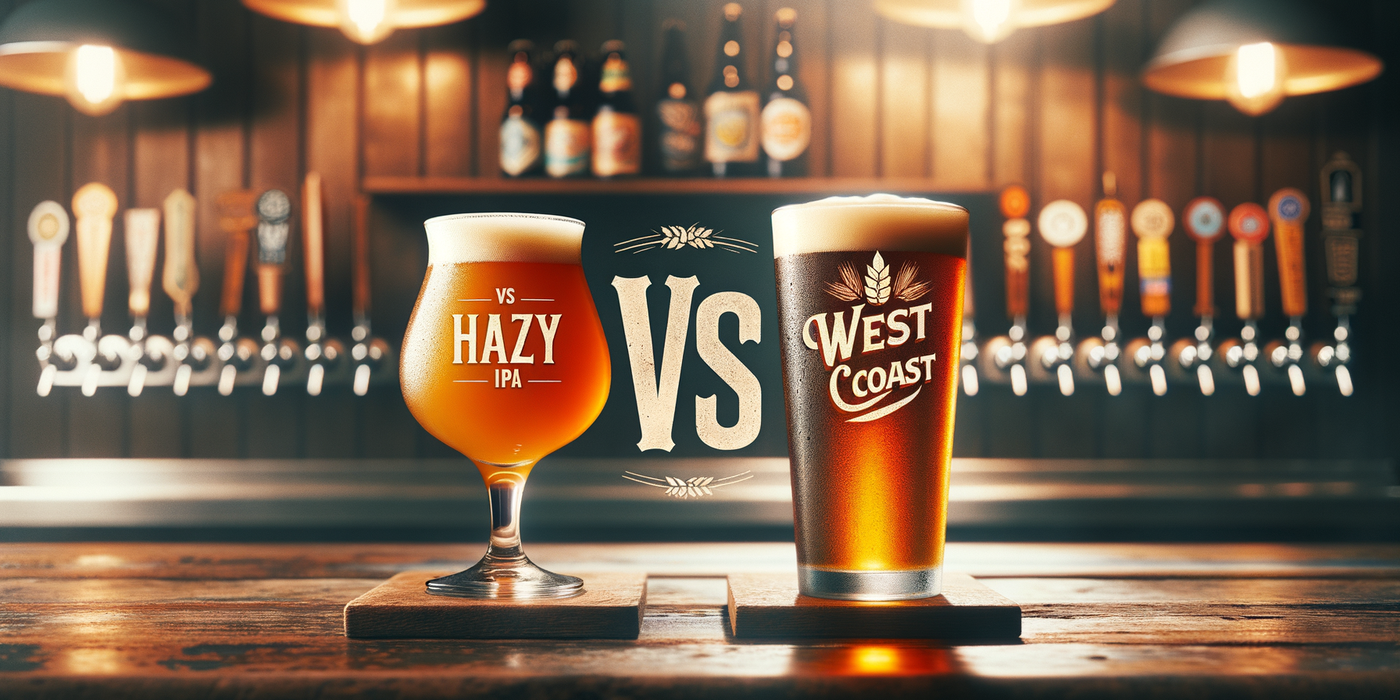
Order a West Coast IPA and a hazy IPA back-to-back and the differences become immediate and obvious.
West Coast tastes like: piney, resinous, citrus peel, bitter, dry mouthfeel, clean finish. Your palate feels sharp and a bit stripped at the end. The flavors are balanced but aggressive.
Hazy tastes like: juicy, tropical, soft, almost sweet, creamy texture, leaves your mouth feeling coated. The finish is pleasant and lingering, not dry. The flavors feel fresh and forward.
One tastes like someone dropped a bag of Cascade hops in your mouth. The other tastes like someone handed you a tropical juice that happens to have alcohol in it.
Neither is better. They're genuinely different beers created with different goals. The West Coast brewer is showing off hop quality and bitterness. The hazy brewer is showing off aromatic intensity and drinkability.
Why the Comeback's Happening
For about a decade, hazy IPAs dominated every craft beer menu. West Coast IPAs started feeling old-school, kind of like the beer your dad drank. But lately, there's been a real resurgence of interest in West Coast IPAs from brewers and drinkers who love the classic style.
Why? A few reasons. First, hazy IPAs can sometimes feel samey after you've had a bunch of them. They're all juicy and tropical in similar ways. Second, West Coast IPAs are actually more food-friendly because the bitterness and dryness cut through rich food. Third, brewers love a challenge, and perfecting a West Coast IPA is genuinely harder than it looks.
You're also seeing hybrid beers now, where brewers blend characteristics from both styles. Slightly hazy West Coast IPAs. West Coast beers with a touch more fruit-forward character. The IPA space is getting more sophisticated and less dogmatic about what's "correct."
Which One Should You Order?
If you like bright, fresh, juicy flavors and a smooth drinking experience, hazy IPA is your style. Order one at your local CityPints.
If you like complex bitterness, resinous flavors, and a drier finish that makes you feel like you've really had a hoppy beer, West Coast IPA is where you belong.
If you want to taste the difference and understand why it matters, order both. They're different enough that experiencing them together makes sense. West Coast IPA will feel sharp and spiky. Hazy IPA will feel round and juicy.
Try Athletic Brewing's Run Wild IPA if you want a textbook West Coast style. Try Trillium, Treehouse, or Barrier if you want classic hazy. Most craft bars will have good examples of both within arm's reach.
The honest truth: personal preference matters way more than style purity. Some people will taste a West Coast IPA and immediately order another. Others will find it too bitter. Same with hazy IPAs. the style wars don't matter if you don't like what's in your glass.
The real win is knowing the difference. Now when you're at happy hour and someone says they don't like IPAs, you can ask which kind they've tried. Because West Coast and hazy are so fundamentally different that one person might love both or hate one and adore the other. That's the actual interesting conversation.
FAQ
What's the bitterness difference? West Coast IPAs are built around bitterness, usually 40-70 IBUs with a sharp, dry finish. Hazy IPAs minimize bitterness (30-50 IBUs) and focus on fruity aromatics instead. If you dislike bitter beer, hazy is probably your safer bet.
Can a hazy IPA be a West Coast IPA or vice versa? No. They're defined by appearance and flavor profile first. A cloudy beer with piney notes isn't really what either style is about. Some brewers blur the lines with hybrid approaches, but the classic styles are pretty distinct.
Which style is better for food pairing? West Coast IPAs cut through rich food really well because of the bitterness and dryness. Hazy IPAs work better with lighter foods or as standalone drinks. The dry West Coast finish actually pairs great with burgers and spicy food.
Why does hazy IPA look cloudy if that's not a flaw? The cloudiness comes from wheat, oats, and proteins in the grain bill, plus hop particles left in suspension. For decades, brewers saw clarity as a mark of quality. Hazy IPA brewers figured out how to make cloudiness part of the style, and the proteins actually contribute to mouthfeel. It's intentional, not accidental.
Which style is newer? West Coast is the modern original (started 1980s). Hazy exploded around 2015. But hazy isn't "better" just because it's newer. It's a different approach to hop intensity and flavor expression.
What's the best West Coast IPA for a hazy IPA fan to try? Start with something less aggressively bitter, like a West Coast pale ale or a lower-IBU West Coast IPA. Look for something with more citrus and less resin. Stone's Pale Ale or Sierra Nevada Pale Ale are gateway West Coast beers for hazy lovers.
Final Take
You don't have to choose a side. Hazy IPAs are delicious when you want juicy, tropical, smooth drinking. West Coast IPAs are delicious when you want to feel hops in a serious way. The craft beer world is big enough for both.
What matters is knowing what you're getting. When you order a hazy, expect juice. When you order West Coast, expect hops. When you're confused at the bar, ask your bartender which camp the IPA falls into. Then order confidently.
The best IPA is the one you actually want to drink. 🍺
Enjoying Happy Hour?
Get weekly craft beer picks, brewery spotlights, and insider guides delivered to your inbox.