Walk into a craft brewery and ask someone to explain stout versus porter. You might get three different answers, all technically defensible. That's because the line between them is genuinely blurry. Modern craft brewing has intentionally muddied distinctions that once were sharper. This guide cuts through the confusion by explaining the original difference, what changed, and why it matters now.
The good news: you don't need to understand the distinction perfectly to enjoy both. The better news: understanding it deepens your appreciation for what you're drinking.
The Original Historical Distinction
Porter came first. Around 300 years ago in England, London brewers created a new style from brown ales that became enormously popular with dock workers and laborers. It was dark, roasty, relatively strong, and cheap. They called it "porter" because porters drank it. 🍺
For about 100 years, porter dominated. Then brewers started making stronger versions, selling them as "stout porter" or simply "stout." The word "stout" originally just meant "strong." A stout porter was a porter that was bigger and bolder. Over time, people dropped "porter" from the name, and these stronger beers became known simply as stout.
This matters historically because stout didn't exist as a separate style; it was literally a category of porter, the strong category.
The distinction hardened as brewers in different regions developed their own versions. English brewers made certain porters and stouts. Irish brewers made different ones. American brewers later put their own spin on both styles. Over centuries, the styles became different enough that the industry treated them as separate.
The Technical Distinction That Almost Works
Here's where modern brewers would explain the difference:
Porters and stouts are both dark ales, brewed with roasted malts that give them their color and roasted character. But traditionally, porters used malted barley (regular barley that's been malted, which means soaked and sprouted), while stouts used unmalted roasted barley. That's a real, measurable difference in ingredients.
Unmalted roasted barley gives a drier, more intensely roasted flavor. Malted barley gives a more complex, slightly sweeter character. In theory, stouts should taste more coffee-forward and sharp, while porters should taste more toffee-forward and rounded.
In theory.
Why the Theory Fell Apart
Modern craft brewing threw traditional brewing logic out the window. Brewers started making stouts with maltier recipes, porters with more assertive roasted character, stouts that were actually weaker than porters, and every other combination you could imagine. The categories stopped being meaningful as distinctions.
So now you've got stouts called "milk stout" because they contain lactose sugar. You've got "oatmeal stout" because they contain oats. You've got "imperial stout," which is just "strong stout." Dry stout exists (looking at you, Guinness). Stout has become a category with subspecies.
Same with porter. You've got "robust porter," which is just a stronger porter. You've got "Baltic porter," which is more lager-like but still called porter. You've got "smoked porter" because someone decided to smoke the malt. The categories are barely containing the styles anymore.
The honest truth: modern craft beer doesn't distinguish stout from porter clearly because brewers don't respect the distinction anymore. You can't go purely by ingredients. You can't go purely by flavor. You have to read the label and accept that a brewery's categorization is somewhat arbitrary.
What They Actually Taste Like
Despite the blurred lines, there are real flavor families here.
Porters tend to emphasize toffee, caramel, molasses, biscuit, and cocoa. The roast is present but more background. They're often slightly sweet, definitely malty. The finish can be clean or slightly lingering. They're the "sophisticated chocolate cake" of dark beer. Complex, textured, inviting.
Stouts tend to emphasize coffee, dark chocolate, roasted grain, and sometimes burnt character. The roast is front and center. They're often drier and more intense. The finish is more likely to be sharp or lingering. They're the "espresso" of dark beer. Bold, unapologetic, demanding attention.
But this is general. Specific beers will blur the line. A sweet milk stout might taste more toffee-like than some porters. A robust porter might taste as roasty as some stouts.
Understanding Stout Subcategories
Since stout has become so complex, knowing these helps:
Dry stout: The Guinness model. Roasty, bitter, dry finish, medium body. This is what people think of as "stout" if they've mostly had Guinness.
Milk stout: Contains lactose sugar, which humans can't ferment. The result is sweeter, smoother, more dessert-like. These often hide high alcohol behind sweetness.
Oatmeal stout: Contains oats, which adds body and smoothness. Often slightly sweet. More approachable than dry stout.
Imperial stout: High alcohol, intense roasted character, complex. Sometimes called "Russian Imperial Stout" because Russian royalty supposedly loved strong English stouts. Often 8-12% ABV or higher.
Foreign export stout: Brewed strong to survive long voyages, now a style in its own right. Less intense than imperial stout, more balanced.
Chocolate/vanilla/coffee stout: Base stout with added flavoring. Tastes like what the label promises.
The reality: stout is now a huge category. You can spend years exploring stout variations and never run out of new things to try.
Understanding Porter Subcategories
Porter has fewer distinct subcategories, but they exist:
Robust porter: Stronger, more intense, more roasted. Otherwise just "more porter."
Baltic porter: Fermented with lager yeast (breaking rule one immediately), often higher alcohol, cleaner than ale-fermented porter. A fascinating hybrid.
Smoked porter: Brewed with smoked malt. Tastes like a campfire. Controversial but good with grilled food.
Brown porter: Lighter in color and intensity, closer to brown ale. Gentler entry point to porter.
Porters have fewer options, which makes exploring them easier and less overwhelming than exploring stouts.
Why Porter Gets Overlooked
Here's the real situation: stout is everywhere, porter is sidelined. When craft breweries make dark beer, they usually call it stout because that word has more brand cachet. Stout sounds strong. Stout sounds interesting. Porter sounds... honestly, a bit quaint.
This is marketing, pure and simple. The actual drink quality of a good porter versus a good stout is comparable. But stout has better branding. So if you walk into CityPints Happy Hour and look at the dark beer selection, you'll probably see twice as many stouts as porters. It's not because porters are worse; it's because breweries and bars have decided stout is the sexier category.
This means the porter section is often where you find underrated gems. If you like dark beer but you're tired of stouts, exploring porter is like finding a secret menu at your favorite restaurant.
How to Approach These Styles
If you're new to dark beer, start with a milk stout or an oatmeal stout. You want something approachable. Skip the dry stout if you hate bitter things; Guinness is not the best introduction. Go for something with built-in sweetness.
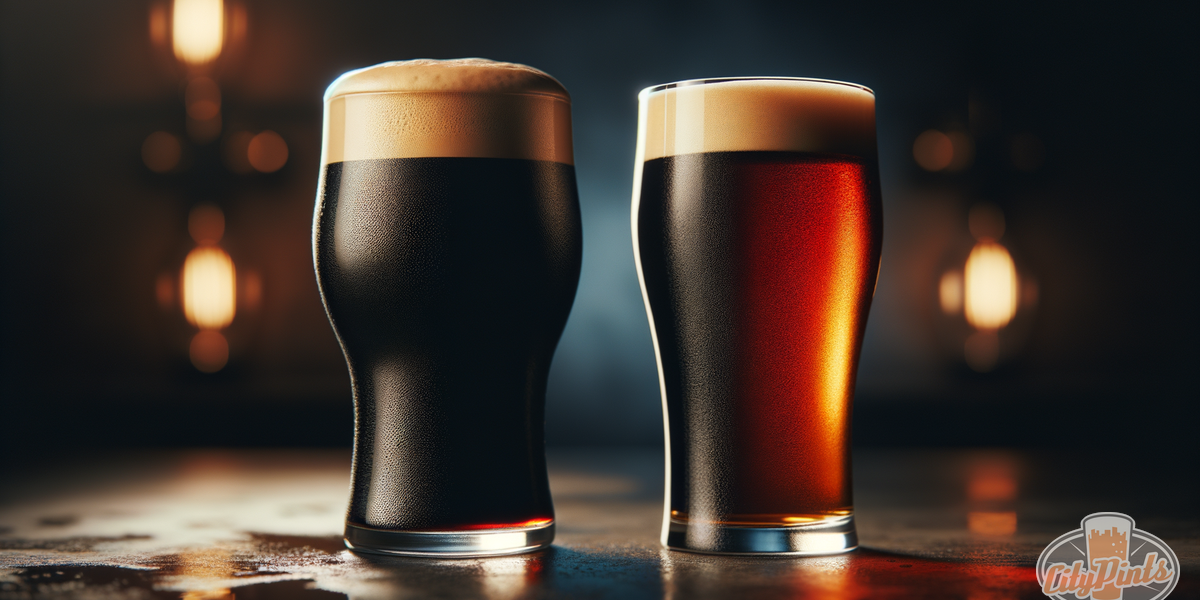
If you like those, move to a regular stout or a porter. Try both. Side-by-side tasting is ideal because the difference becomes obvious when you taste them immediately after each other.
Once you've done that, you can explore subcategories. Try an imperial stout. Try a smoked porter. Try a chocolate stout. Try a Baltic porter. Try a foreign export stout. The dark beer universe is vast and rewarding.
The honest take: you're not going to become a stout or porter expert in one evening. These are beers to come back to, styles to explore over time. Go to CityPints and grab something dark when the mood strikes. You'll build knowledge gradually and naturally. That's the whole point of happy hour: discovering things without pressure.
FAQ
Is stout always darker than porter?
Not necessarily. Color comes from the roast level of the malts, and you can make dark porters and lighter stouts. That said, stout is usually darker in practice because the roasting methods tend to produce darker color.
Can I substitute stout for porter in recipes or pairings?
Yes, generally. They're similar enough that if you like one, you'll probably like the other in most contexts. The specific beer matters more than the category. A smooth oatmeal stout might pair better with dessert than a bold robust porter.
What's the difference between stout and black IPA?
Black IPA is an IPA brewed with roasted malt, so it's dark like a stout but hoppy like an IPA. It's basically a crossover. It's neither stout nor IPA; it's its own thing. Try one if you love hops and want to explore dark beers.
Why do so many stouts contain lactose or oats?
Because brewers know people are intimidated by dry stout. Adding lactose or oats makes stout more approachable and adds body. It's a strategy to expand the audience for dark beer. Some people hate this; some people think it's genius. Both opinions are valid.
Is Guinness the only real stout?
No. Guinness is a specific style (dry Irish stout), and it's excellent, but it's one example. There are hundreds of other stouts, many of which are quite different. Guinness is good specifically because it pioneered the style, not because it's the only one worth drinking.
The Recommendation
Next time you're at CityPints, look past stout and grab a porter. Specifically, grab one that sounds interesting to you. If it's a robust porter, even better. You're likely tasting something underrated. Porter has history, complexity, and character. Modern craft beer has neglected it unfairly in favor of stout. By ordering a porter, you're doing two things: discovering a beer you might genuinely prefer, and subtly pushing back against the marketing that says stout is the only dark beer worth attention.
And if you hate it? At least you tried. You can always go back to stout. But something tells us you'll find a porter you love.
Enjoying Happy Hour?
Get weekly craft beer picks, brewery spotlights, and insider guides delivered to your inbox.